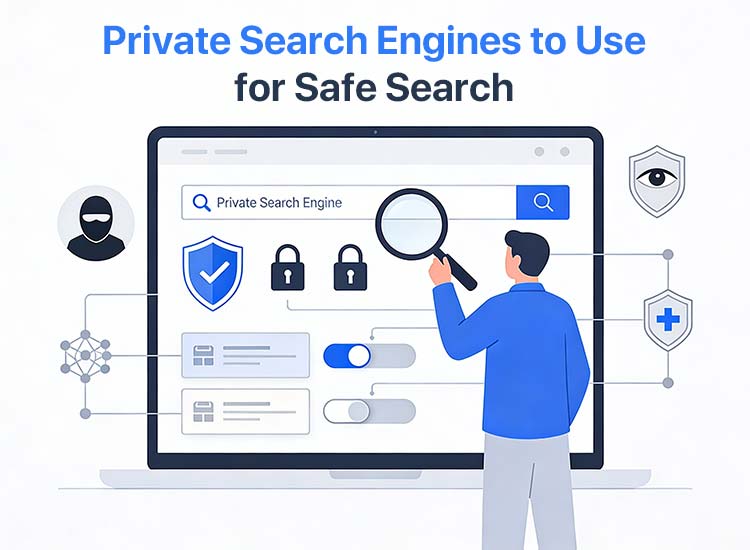
You are being tracked online! All of us are. Recall how many times you searched for something, and ads showing the same item or service suddenly started popping up all the time on your screen. While it seems like no harm, according to privacy experts, mainstream search engines quietly collect vital information about you, including your finances, political beliefs, medical history, shopping habits, and more. The good news is that there are practical steps you can take to protect your privacy, and this guide will introduce you to powerful alternatives and actionable tips so you can take control of your online searches.
All this data may be sold to or shared with third parties for marketing, advertising, and other purposes. However, why would you want “big tech” algorithms to know you even better than your inner circle? That is why the best private search engines exist to avoid tracking, personalized, filtered ads, and behavioral profiling.
Becoming increasingly popular among users, a private or secure search engine does not track or collect any of your information, including your search queries, IP addresses, and other identifying details, making it challenging for third parties to track your searches and spy on your activities.
DuckDuckGo, Brave Search, Qwant, Startpage, and Ecosia are among the best search engines for private and secure searches that we have personally tried. In making our selections, we focused on key criteria such as privacy (how well user data is protected), usability (how easy and intuitive the interface is), and speed (how quickly results are delivered). By prioritizing these areas, we aim to recommend search engines that not only safeguard your data but also offer a smooth and efficient search experience. Before reviewing them deeply in this article, here is a quick overview of what exactly a privacy-focused search engine is, why you need one, and how to choose the right one.
What Is a Private Search Engine
Simply put, a private internet search engine is a secure search engine that does not track your user data and displays results with added privacy and protection. These portals for internet search do not record your online footprints or store what you search online, ensuring your searches remain secure.
While general search engines like Google dominate the market and offer more personalized results, a wide range of users still prefer private search engines for their numerous benefits.
Why Use a Private Search Engine
From your wish list to your shopping lists, Google or the other mainstream search engine you use, notes everything. Moreover, there is little to no transparency about how this data is used. Hence, a privacy-centered search engine brings you the following benefits.
- Fewer and less intrusive ads: Since secure search engines do not track your online footprints, they do not show many ads that are influenced by your browsing habits or past searches.
Unlike a normal search engine, they do not cache your search keywords and the webpages you visit. While Google encrypts your search terms, unlike private search engines, these are still visible to Google and the third parties it may share them with.
- Mental peace: When you know no one is following your footsteps online, i.e., no search engine or third party is monitoring your searches; it gives you peace of mind.
- No filter bubbles: Filter bubbles are algorithmic recommendation systems that return only those search results that you may find interesting based on your past searches. It means the more you rely on these search engines, the search results will match your current worldview.
While this may be helpful when you search for your favorite cricket team. However, when you want unbiased movie reviews or political news, the objective, neutral, and non-personalized search results provided by uncensored search engines are more helpful.
- True privacy: While general search engines have a private or Incognito mode, your data is still saved and shared. The most private search engines truly hide your search terms and encrypt them. Additionally, these search engines are not linked to your email account or other accounts, enhancing your privacy.
So, that’s why users consider switching from Google and other popular search engines to a more private browsing search engine.
There are many privacy-focused search engines. However, you must keep in mind a few factors when you choose one for yourself.
How to Choose a Private Search Engine
While selecting a search engine for private searches, you must consider the following factors to ensure the search engine respects your privacy.
- You get no filtered information based on your personal profile. The best private search engines show the same useful and unfiltered information to all users.
- It does not track or store your data.
- The secure search engine does not create a personal user profile to show targeted ads.
- The most privacy-centered search engines do not note your IP address. Even if they record it temporarily to show local searches or check out potential abuse, they take measures to anonymize it.
- A private search engine blocks trackers and third-party cookies to protect your privacy. Moreover, the best ones may also encrypt your connection to hide your searches from your internet service provider.
- The world’s most private search engines take their privacy policy very seriously and keep it transparent. They comply with regulations, such as EU data privacy regulations (GDPR) for companies based in Europe.
Now that you are familiar with private search engines and what to focus on when choosing one, let’s review the best ones available currently.
What Are the Best Private Search Engines
Search engines top-rated for privacy include names like DuckDuckGo, Brave Search, Qwant, Startpage, and Ecosia. Below is a detailed overview of these search engines, so you can make the best choice.
1. DuckDuckGo
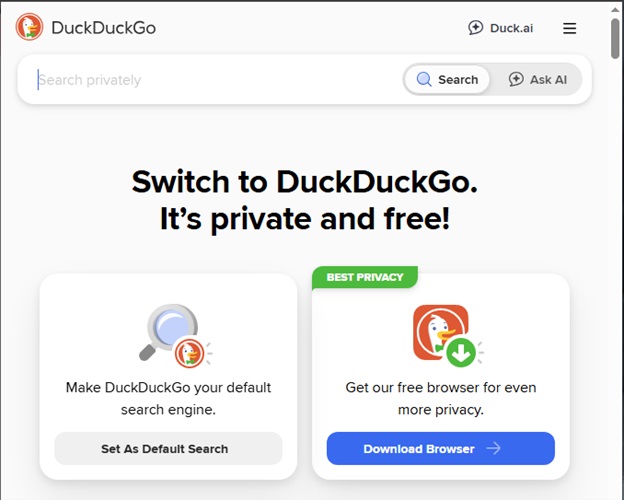
Meet DuckDuckGo. It is among the highly popular Google search engine alternatives for privacy. DuckDuckGo is well-known for keeping no trace of your search history, IP address, or personal data. Moreover, it does not create user profiles for targeted advertising; instead, it offers contextual ads and the following features.
Key features
- It does not share your search query with the website you visit, ensuring no search leakage to keep your search terms private.
- DuckDuckGo blocks third-party trackers from following you online.
- It displays non-personal, i.e., the same search results to every user with a particular query, eliminating the “filter bubble” that personalized search tracking creates.
- With !bangs, you can search other websites, such as YouTube, Wikipedia, or Amazon, directly by placing an exclamation mark before your search.
- The DuckDuckGo Chrome extension evaluates the privacy levels of websites and blocks basic trackers.
Pros
- High-quality results, combining DuckDuckGo’s own crawler and Bing’s algorithms
- Clean, simple, and user-friendly
- HTTPS-secured connections
Cons
- It does not disable all Microsoft tracking by default
- US-based and a part of the Five Eyes intelligence-sharing alliance (may have to comply with mass surveillance programs)
Also know: Most Trusted & Safe Torrenting Sites to Use in 2026
2. Brave Search
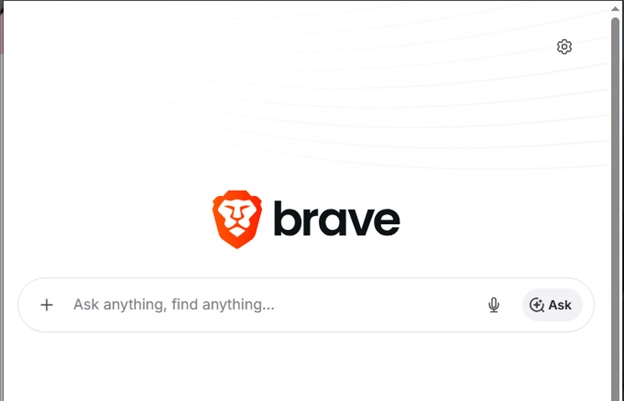
Brave Search is another renowned search engine for secure search, best known for its independent indexing. Instead of relying on Bing or Google for indexing, it uses its own index to provide independent search results.
Additionally, like every private safe search engine, Brave Search does not collect your personal information, device details, or your search terms. While you can allow it to collect aggregated usage metrics, they remain anonymous and unlinked to your identity. Furthermore, the following are some other attractive features of this search engine.
Key features
- Brave Search has built-in Brave Shields to block trackers and ads.
- It provides summarized AI-generated answers to your queries.
- Brave Search supports local searches (for example, salons near me) without revealing your precise location.
Pros
- Faster than many competitors
- Simple and clean search engine
- No filtered search results
- Privacy-centered Brave browser integration
Cons
- The new search index may not be as complete as established search engines
- Subject to a mass surveillance program, as it is US-based and a part of the Five Eyes intelligence-sharing alliance
Click here to try Brave Search
3. Qwant
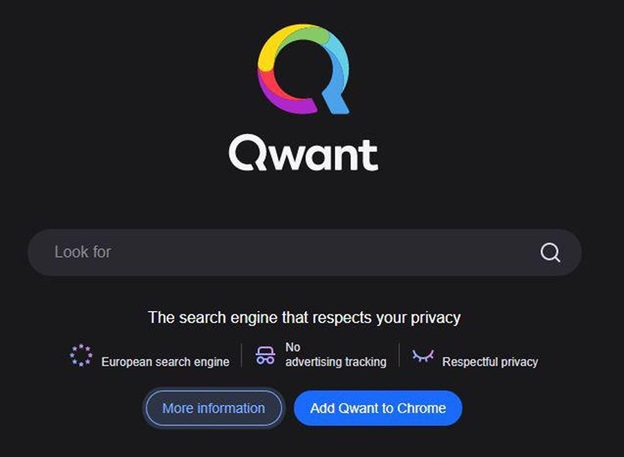
Qwant is another private search engine you can try if you are searching for a search engine that adheres to strict privacy laws. Based in France, Europe, Qwant is subject to data privacy protection regulations that are stricter than those in the US and many other countries. It protects your privacy by not tracking your searches, search history, or selling your personal information to any third party.
Moreover, a dedicated ad-free, safe, and filtered Qwant Junior mode for children aged 6 to 13, a clean, Google-like interface, and the following are the top Qwant features.
Key features
- It has its own independent indexing and partnerships with Microsoft for ads and fallback results.
- Qwant does not use tracking cookies or create personal profiles.
- It categorizes search results by News, Web, and social media.
- The Qwant homepage also shows trending events, people, and other stories.
- You can type “!” or “&” followed by the name of your favorite website to search only for that website.
- Tabs like Qwant Boards or Qwant Music let you share multimedia content.
Pros
- Follows high privacy standards
- Ensures no filter bubble, i.e., shows unbiased results
- Blocks trackers with the Qwant VIPrivacy browser extension
- Secures your searches with HTTPS-secured connections
Cons
- While taking steps to anonymize, it shares your IP address, search terms, and browser details with Microsoft
- A part of the Nine Eyes intelligence-sharing alliance and subject to the mass surveillance program
- Sometimes slower than other popular search engines
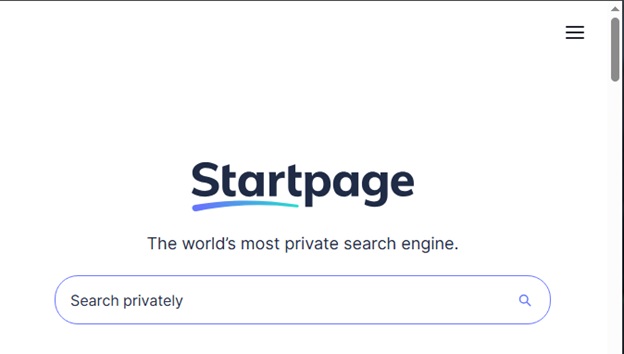
4. Startpage
Next, we have Startpage on our best private search engines list. It delivers Google-grade, high-quality search results without compromising your privacy. Founded in the Netherlands, Startpage follows strict GDPR privacy regulations. Hence, it does not share your personal data, IP addresses, or search history, and has the following features.
Key features
- The anonymous view feature lets you visit websites via a proxy.
- There are tools like translations, weather updates, a currency converter, and stock trackers, for instant answers.
- It lets you personalize your search criteria and results.
Pros
- No personalized ads
- Compliance with high privacy standards
Cons
- Acquisition by System1, an ad-tech firm, raises concerns about its independence
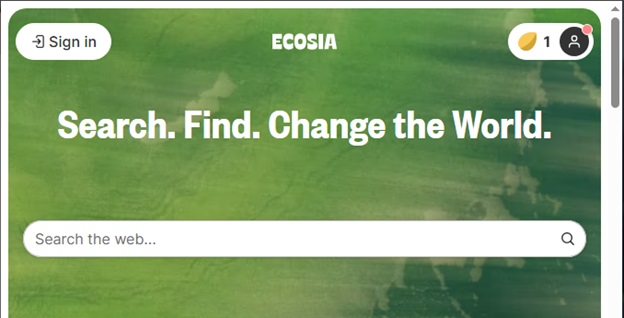
5. Ecosia
You can save the environment when searching with Ecosia, one of the most secure search engines. Donating nearly 80% of its revenue towards the noble cause of planting trees across the globe, Ecosia protects your privacy by not selling your data, not using third-party trackers, allowing you to disable your search history, anonymizing search data within a week, and offering the following features.
Key features
- While you can enable personalized search, Ecosia does not create your personal profile or save your personal search history.
- Though it stores your IP address, it removes parts of it to ensure anonymity.
- It encrypts your searches on the internet to keep them private.
Pros
- Fast and relevant search results
- HTTPS-Secured connections
Cons
- Even if anonymized, it shares personal data with Microsoft
- Less strict than other names on this list, such as DuckDuckGo
That brings us to the end of our roundup of the best private search engines that do not make profits out of your data and privacy.
Since your privacy is your responsibility, here are a few extra tips to protect your search privacy.
Also know: Reverse Image Search Tools in 2026
How to Protect Your Search Privacy: Effective Tips
A search engine, despite being private, needs a few extra steps from your end to ensure complete privacy. Here they are.
- Use a VPN. A VPN, or Virtual Private Network, moves your internet connection to a server in some remote location, making it difficult for websites to track or identify you.
- Use a secure web browser to ensure better privacy and data protection.
- Ensure all your passwords are tough to crack. Preferably, a combination of numbers, symbols, letters, and special characters, as a strong password, is your first line of defense against cyber threats.
That’s all for this guide. We hope it helps you have a truly secure and private search experience, as what you search online is only your business.
Frequently Asked Questions
Q1. What search engine is totally private?
Search engines like DuckDuckGo, Brave Search, Qwant, Startpage, and Ecosia are renowned for their privacy. You can check the sections above for details.
Q2. How safe is a private search?
Private search through an Incognito or Private mode is not completely private. It is only locally secure. While your browser does not save history, cookies, or form data on your device when you search in a Private or Incognito mode, your activities are still visible to your internet service provider, employer, school, or websites you visit. Moreover, there is no protection from malware or tracking.
Q3. How do you search very privately?
To search with total privacy, you need a private and secure search engine, such as DuckDuckGo and Brave Search, that does not track your behavior or record what you search for.