With ever-growing digital payments, business owners often find themselves confused about which payment gateways to choose. Before diving into the options, it’s important to know what to prioritize. Small business owners should look for payment gateways that offer strong security features to safeguard their customers’ data, clear and affordable pricing to keep costs in check, and seamless integration with the platforms they already use, such as Shopify or WooCommerce. Reliability, ease of use, and customer support are also key factors to consider. While some online payment gateways are the fastest at getting your money into your account, they may not be the most cost-effective or safest.
The best payment gateway is one that combines fast payments, data privacy and security, and cost control in a single package, which is hard to find. That’s why we researched deeply to handpick the top payment gateways in the world that are the perfect middleman between your eCommerce website or online store and customers to handle payments dependably, quickly, and affordably.
To find the best eCommerce payment gateways, we compared their pricing structures and transactional fees, checked how well they integrate with platforms such as Shopify, WooCommerce, and BigCommerce, evaluated their interface and performance, checked how fast they deposit funds into the business account, reviewed their data security to understand how well they protect from fraud, and tested how they handle customer grievances. We also paid close attention to security standards, ensuring each recommended provider is PCI DSS compliant, uses end-to-end data encryption, and offers features that give small business owners concrete security assurance when handling customer payments.
In our research, we found Stripe to be the best payment gateway for SaaS and eCommerce businesses, as it works perfectly for wallets and recurring payments and allows complete control over user flows. For DTC brands and businesses that use Shopify, Shopify POS is the best choice, as it integrates beautifully with Shopify and ensures smooth mobile checkouts, without extra setup or processing charges. For those wanting deep insight into their sales data, Finix is the best pick, as it includes an information-rich dashboard with all sales data you may need. For businesses with high transaction volumes, Payment Depot is the most cost-effective payment gateway. For unified business management, you can choose Stax, as it includes invoicing, billing, and customer management in a single dashboard.
Let’s go deeper into these payment gateways for Windows and mobile payments.
What Are the Best and Safest Payment Gateways
Finix, Payment Depot, Stripe, Stax, and Shopify POS are the best international payment gateways in 2026. Let’s explore each of them below with their unique features.
1. Finix
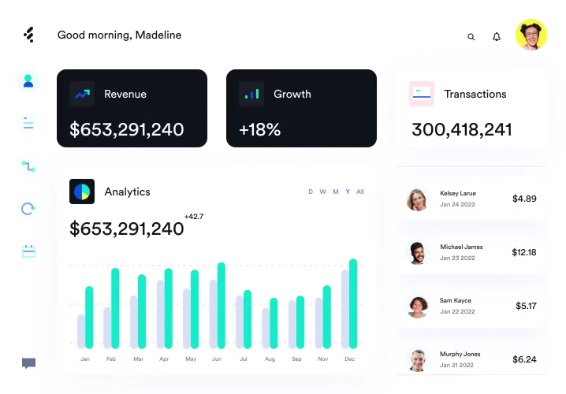
Finix is a highly-rated all-in-one payment processing solution with a point-of-sale (POS) system and a payment gateway. The best thing about this payment gateway is its easy-to-understand dashboard for new users. The prebuilt dashboard contains all necessary data and visual graphs to help users analyze their sales and transaction volumes, disputes, refunds, and other crucial information. The following features are also notable about Finix.
Key features
- Comprehensive tools for in-store and online selling, for example, customizable checkout pages.
- Low-code APIs to effortlessly integrate checkout features, payment options, and data into your existing website or software.
- Low transaction fees with interchange-plus pricing.
Also know: Best Document Management Software for Windows 11/10
2. Payment Depot
If best value for high transaction volumes and chargeback protection are your priorities, Payment Depot is one of the best payment gateways. With its subscription-based pricing model, you get high cost benefits if you have high transaction volumes, as you can pay a flat monthly fee and a minor per-transaction fee over wholesale rates, reducing transaction costs compared to conventional percentage-based plans. Moreover, it also makes it easy to predict expenses for the month and plan budgets.
In addition to cost optimization, Payment Depot offers chargeback and risk monitoring to protect your business from customers who make fraudulent claims to get a chargeback. Apart from this, below is what else is likeable about Payment Depot.
Key features
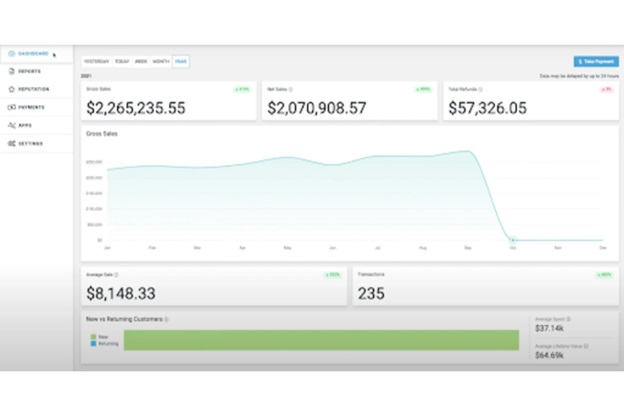
- A reputation management tool to search and monitor your business reviews on popular websites.
- Access to crucial sales reports and analytics.
- A powerful invoicing tool for businesses that routinely charge their clients for services.
3. Stripe
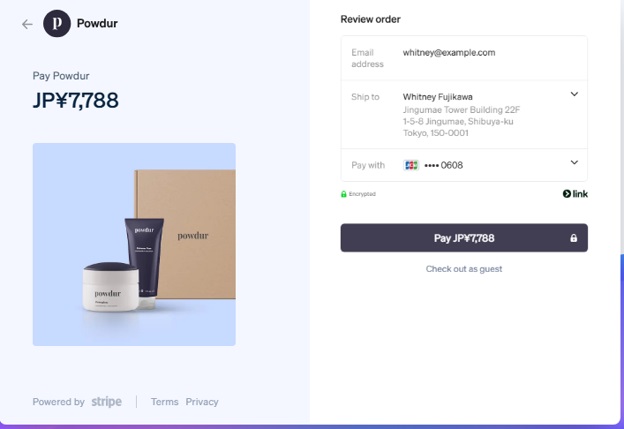
Best for eCommerce, Stripe is a safe payment gateway that accepts more than 135 currencies and over 100 payment methods. With its prebuilt templates, users can easily create online checkout pages to embed into their website or application. Additionally, integration with a wide range of eCommerce platforms and the following features are the reasons Stripe is among the safest ways to pay online for customers and businesses.
Key features
- It supports a variety of payment methods, including digital wallets, credit and debit cards, and bank transfers.
- Easy handling of recurring transactions with a subscription-based model that automates payment processing and reduces payment failures.
- Developer-friendly API and detailed documentation make it easy to begin payment processing.
- AI-based fraud protection that automatically detects suspicious charges.
- An automatic tax calculator to calculate VAT, GST, and sales tax.
- Real-time information about customer payments and behaviour.
4. Stax
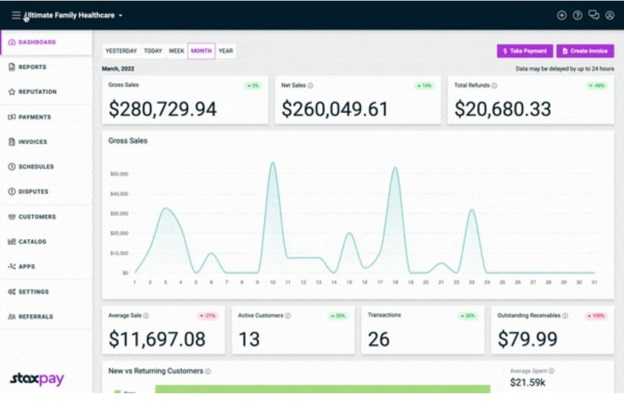
Formerly Fattmerchant, Stax is the most popular payment gateway that allows software developers to add branded payment processing to products easily. Whether you have developed products as an independent software vendor (ISV) or software as a service (SaaS), you can effortlessly add payments to applications using the Stax Connect service. Moreover, a pre-built no-code dashboard and the following features make Stax an attractive payment gateway.
Key features
- Compatible with digital wallets such as Google Pay and Apple Pay.
- Options for dipped, tapped, or swiped card payments.
- A detailed dashboard with analytics.
Also know: 5 Best VPN for Binance in 2026
5. Shopify POS
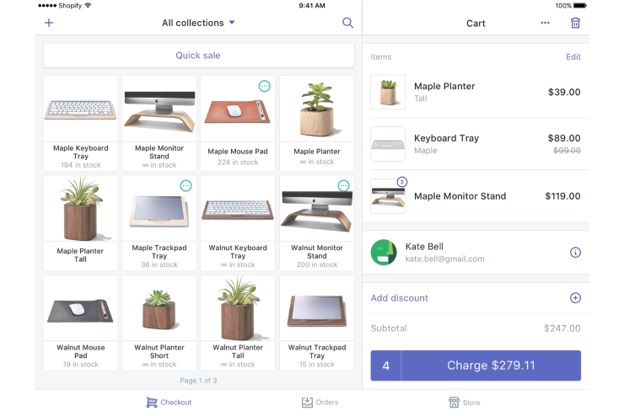
If you are searching for the best and safest payment gateways for omnichannel retail integration, you can choose Shopify POS. Its point-of-sale system integrates in-person and online sales for easy retail operations. With full integration with Shopify, it helps manage inventory, orders, and customer data hassle-free across various channels. Additionally, the following are some other remarkable features of Shopify POS.
Key features
- A customizable grid interface to customize the POS layout for fast and efficient transactions.
- Compatibility with multiple payment methods.
- Built-in analytics for actionable information about sales performance to help users make informed decisions.
- Support for nearby device login; staff can approve sign-in from a previously logged-in device through Bluetooth or QR code and control the session length.
That concludes the list of payment gateways you can choose from. The following section compiles and answers all commonly asked questions about payment gateways to clear up any doubts you may have.
Frequently Asked Questions
Q1. What is a payment gateway with an example?
A payment gateway is an online or digital service through which businesses accept and process payments. It is a bridge between the bank and merchant for seamless online and physical transactions. For example, a customer visits an eCommerce store and chooses a ring to purchase, clicks checkout, enters their information, chooses a payment gateway (from those available on the website, for example, Stripe), the payment gateway redirects the customer to a secure payment page, the customer enters their payment details, the payment gateway encrypts and verifies the data, the payment gets authorized, confirmed, and settled.
Q2. What are the types of payment gateways?
Hosted payment gateway (a third-party hosts the payment system), API-hosted payment gateway (processes payments via an Application Program Interface), self-hosted payment gateway (businesses control the whole payment process), and local bank integration payment gateway (integrates with local banks for easy online payments) are the types of payment gateways.
Q3. What are the best payment gateways?
Finix, Payment Depot, Stripe, Stax, and Shopify POS are consistently listed as the best payment gateways. You can check their details in this article.
Q4. Can I test a payment gateway before going live?
Yes, you can test the payment gateway before going live. Almost all popular payment gateways offer a dedicated sandbox environment, test API keys, and dummy cards to test the gateway in simulated real-world transactions, without affecting live funds.
Q5. Is a payment gateway necessary?
Yes, a payment gateway is necessary to accept digital payments, such as payments through cards or digital wallets.
Q6. How to get started with a payment gateway?
To get started with a payment gateway, choose a service provider, sign up for a merchant account, integrate the service on your website, choose payment methods, and then test the payment gateway.
Q7. How does a payment gateway work?
A payment gateway works by allowing businesses to check a customer’s bank balance securely to ensure sufficient funds are available for a transaction, transmitting payment information to the payment processor, and then forwarding the payment to the business bank account.
Q8. What is the difference between a payment gateway and a payment processor?
A payment gateway software allows you to accept payments from customers through various digital payment methods, such as digital wallets like PayPal or credit cards, without creating a separate account for each provider. A payment processor allows you to receive funds from online customers, handling the complete payment processing from customers, including risk management by verifying every transaction before it proceeds and transaction authorization on behalf of merchants when needed by credit card companies. In other words, payment gateways open up various forms of payments, and payment processors allow the transactions to go through smoothly.
Q9. Which payment gateways should you avoid?
You should avoid overly complex payment gateways with hidden processing, setup, chargeback, or monthly fees; slow or delayed payout systems (it should not take more than two to three days to release money); those with only long-term contracts (so you don’t get stuck); those that don’t integrate well with essential tools; those not optimized for mobile use; and those without fraud and malware protection tools.
Hopefully, this guide helps you choose the best payment gateway for your needs. If you have any questions or suggestions to make this post better, feel free to leave a comment.