A driver is like a translator between your computer and its parts. It is a little piece of software that helps your computer and hardware components talk to each other. Without a driver, your device may not work properly. However, if you use the wrong driver, it can cause problems. That is why it is important to make sure the driver matches your operating system. You can check if a driver is a WHQL driver to confirm it is compatible.
To check if a driver is WHQL certified, right-click the “Start button,” choose “Device Manager,” double-click the category of the driver you want to check, right-click the driver, choose “Properties,” navigate to the “Drivers” tab, and look for “WHQL” in the description of the driver.
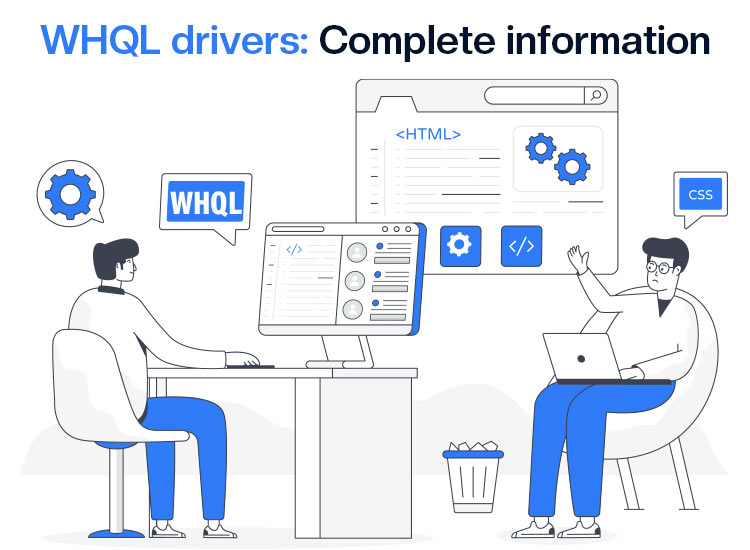
WHQL, i.e., Windows Hardware Quality Labs, is Microsoft’s driver and hardware testing service to ensure that they comply with Windows operating systems. Earlier called Microsoft Compatibility Labs (MCL), this service is also known as Winqual or Windows Quality Online Services.
This article helps you understand this driver and hardware testing service and the difference WHQL drivers make. Let’s get started.
What Is WHQL
The simple WHQL meaning is a lab that provides different test suites for hardware and software to prove to Microsoft and you that the hardware or driver is stable and will work correctly on Windows devices.
Once the driver of hardware clears the WHQL tests, its manufacturer can use terms such as “Certified for Windows,” “WHQL Certified,” “Windows (your operating system version) compatible on the official website to indicate the product or driver meets Microsoft standards.
You can view the Windows Hardware Compatibility List to learn what products have WHQL certification.
Now that you understand the WHQL certification, let’s help you understand the WHQL drivers.
What Is a WHQL Driver
The simple WHQL driver meaning is the signed or certified driver that has passed the WHQL tests, is stable, and ready to be used on a Windows operating system.
The signed drivers have an encrypted digital security signature attached to their installation file set (such as INF files, README, driver executables, etc.). A digital signature is like a stamp of approval from Microsoft, showing that the driver has been tested and trusted. Signing the drivers creates a catalog file that is an important part of the driver installation and helps your operating system recognize the driver.
While you can install non-certified drivers, doing that has many disadvantages. We will learn more about them after helping you understand the meaning of non-WHQL drivers.
What Is a Non-WHQL Driver
A non-WHQL-certified driver is a driver that may not have cleared or gone through the WHQL certification tests and may not have been tested for compatibility with the Windows operating system.
These drivers are attest-signed and do not have a WHQL certification. These driver manufacturers have done rudimentary testing on the drivers to ensure that Windows trusts them. However, Microsoft does not guarantee the functionality, reliability, and compatibility of such drivers.
Hence, whether or not a driver is a WHQL driver makes a lot of difference for your computer performance.
Also know: Where Are Drivers Stored in Windows 11 and 10
What Is the Difference Between a WHQL and Non-WHQL Driver
Whether or not a driver is a WHQL-certified driver impacts many factors. Here are the key ones.
Stability
Since WHQL drivers have gone through tough Microsoft tests, they are less likely to conflict with other hardware or software components and cause system crashes or other issues.
On the other hand, the non-certified drivers may not be stable, causing various software and hardware problems in a Windows PC.
Security
Thorough WHQL testing guarantees the driver has no malware or other vulnerabilities. On the other hand, the non-WHQL drivers have not been tested, or they may not have cleared the tests, making them prone to malware and other loopholes.
Compatibility
The WHQL drivers are largely compatible with Windows operating systems, as they have already been tested for compatibility. However, the same may not be true for non-WHQL-certified drivers.
Moreover, the installation of drivers without WHQL certification may lead to multiple errors on your device that typically show up when you install drivers, update them, or boot up the system.
Common Errors You May Experience Without WHQL Drivers
Here are a few common issues you may encounter if the drivers are not WHQL certified.
Driver signature errors
When the Windows operating system fails to confirm the valid WHQL digital signature of a driver, you may experience issues such as Windows cannot verify the digital signature for this file (Error Code 52), the driver is not digitally signed, or the third-party INF does not contain the digital signature information.
If you believe the driver to be legitimate, you can disable digital signature enforcement in Windows to solve this problem.
PC startup issues
Non-WHQL-certified drivers may interfere with the hardware and software components, resulting in errors such as “This device cannot start (Code 10),” and Windows requires a digitally signed driver.
Also know: How to Fix “A Driver Can’t Load on This Device” Error in Windows
Blue Screen of Death and system crashes
System crashes and Blue Screen of Death (BSOD) errors, such as Driver IRQL NOT LESS OR EQUAL, SYSTEM THREAD EXCEPTION NOT HANDLED, and PAGE FAULT IN NONPAGED AREA, are other issues caused by non-WHQL drivers.
Hence, it is always recommended to use WHQL-certified drivers. Besides an error-free performance, stability, and compatibility with Windows systems, these drivers are easily installable via Windows Updates or one of the best driver update software.
However, it is also notable that many manufacturers offer Beta drivers that are released before the stable release to test new features, bug fixes, and performance optimizations. They offer better output in newly released games or specific applications. However, they may also cause unexpected errors, compatibility issues, or graphical glitches that are fixed in the next WHQL version of the driver.
Also note that there are confusing names in the driver ecosystem, such as WHQL Game Ready drivers, Game On, Studio Drivers, Radeon Pro, or Arc Pro.
Game Ready drivers are NVIDIA drivers, and Game On are Intel drivers that are aligned with the major game releases or with updates to existing games, introducing specific optimizations for these games from the first day.
NVIDIA, in addition to Game Ready drivers, offers Studio Drivers for 3D artists, content creators, and professionals who use heavy editing, design, or rendering applications, prioritizing reliability and stability over the latest game optimizations.
The drivers Radeon Pro or Arc Pro for AMD and Intel are more inclined towards workstation graphics cards, with a longer update cycle and improvements directed to professional productivity apps.
All these driver packages may or may not be certified by WHQL. However, in many cases, these are WHQL-certified drivers with support from the official manufacturer to minimize risks associated with non-certified drivers.
That’s all for this WHQL drivers guide. We hope you no longer feel confused about certified and non-certified drivers. However, if any doubts persist, you can write us a comment. We will be happy to answer your questions.
Frequently Asked Questions
Q1. What does a WHQL driver do?
A WHQL-certified driver confirms that the driver will work with your Windows version. Manufacturers use the “Certified for Windows” or similar terms for drivers when the driver passes the WHQL or Windows Hardware Quality Labs rigorous tests.
Q2. Are WHQL drivers better?
Yes, WHQL drivers are a notch better than non-certified drivers as they enhance compatibility with Windows systems and minimize potential problems, such as crashes or conflicts with other software on your computer.