In this constantly evolving world of software development, choosing the ideal API development tools can be a major turning point.
Yes! There are several reasons why choosing the right API software development platform is critical. Building APIs is primarily the foundation of software applications because they facilitate effective communication between various software components.
So, when you choose well-developed API development technologies, it can make integration easier, enhance safety features, and ultimately facilitate a faster software development cycle.
Additionally, the correct API development tools can offer helpful resources and assistance, enabling developers to quickly overcome common challenges in software development. Hence, it’s important to take time to understand your needs and analyze available API software development platforms.
This choice of API development technologies will not only affect the technical implementation of your project but can also affect the productivity and collaboration of your team.
Here is a guide that provides a thorough analysis of the best API development tools, helping you make an informed decision about what best fits your development needs. But first, let’s understand the key criteria for selecting the right platform for Building APIs.
Key Factors for Choosing an API Development Platform
When choosing the best free Web scraping tools and API development platform, you can consider the following key features that ensure a smooth development process:
- Ease of Use: Look for API development tools that are user-friendly for both new and experienced developers. It should be easy to navigate and help speed up your development. Look for features like drag-and-drop tools, straightforward documentation, and useful tutorials, which are important for the API development process.
- Security Features: Security is very important today. Choose an API software development platform with strong security features, such as user authentication, data encryption, and detailed audit logs. This will help you protect your business and gain your users’ trust.
- Scalability: As your business grows, your needs for building APIs will change. Pick an API development skills that can grow with you. Make sure the API development process can support additional traffic and new features without compromising performance, so you can adjust easily to new requirements.
- Integration Capabilities: You probably use a lot of tools and services already. The best API platform should easily connect with your current systems, like databases or third-party APIs. This will save you development time and help you use your existing resources effectively.
- Support & Community: A solid support system and an active community can enhance your experience. Look for an API development process that offers good documentation, tutorials, and forums where you can ask questions and share information with other developers. Getting help quickly can make a big difference when you face challenges.
By keeping these points in mind, you can narrow down your options and select the best API development technologies for your organization’s needs.
5 Best API Development Tools to Use in 2026
Choosing the right API software development tool is not an easy task. It is determined by several factors, including your project requirements, API architecture, automation requirements, and API development skills for standards such as REST, gRPC, GraphQL, WebSockets, and OpenAPI.
So, let’s explore some of the best API development tools to use in 2026 that help developers with designing, testing, documenting, automating, and managing APIs more efficiently.
1. Postman
Postman is one of the most versatile and widely used API software development and testing platforms that has grown in popularity because of its intuitive user interface and wide range of features.
While not explicitly centered around AI, Postman provides numerous features for API documentation, monitoring, testing, and collaboration. It has a large community and a wide distribution, making it a prime candidate for developers looking for a full-featured solution.
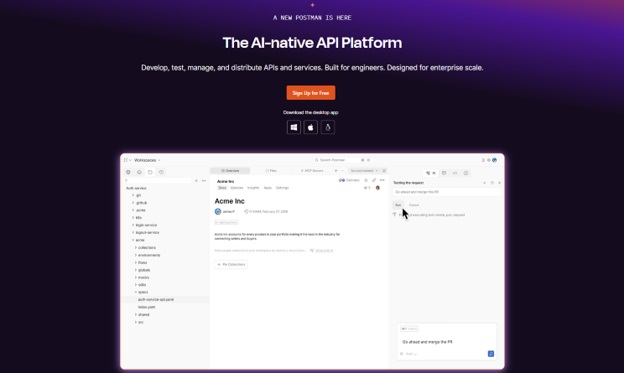
Postman Feature:
- REST API testing
- Mock servers
- GraphQL support
- API monitoring
- Automated collections
- WebSocket support
- Team workspaces
- CI/CD integrations
Website: https://www.postman.com/
Also know: How to Configure a Virtual Directory on Windows IIS Server
2. SwaggerHub
SwaggerHub continues to be a top platform for building API governance and design. It is based on the OpenAPI Specification (OAS), which is now the industry standard for documentation related to REST APIs. SwaggerHub’s API development process offers an effective ecosystem for API design, documentation, and testing.
Swagger has become more well-known due to its strict specifications that follow industry standards. These guidelines make it possible for developers to collaborate with one another and for tools to seamlessly integrate. However, it lacks integrated AI for testing and creating documentation.
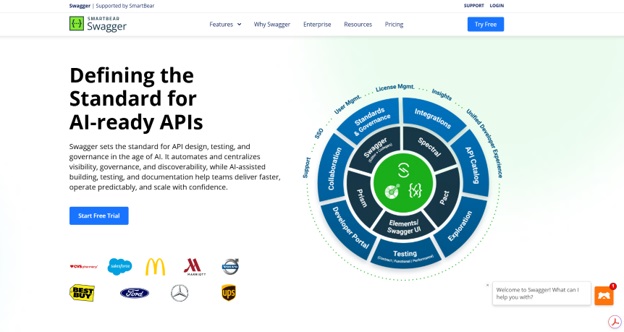
SwaggerHub Features:
- OpenAPI design
- API versioning
- Governance rules
- Documentation generation
- Team collaboration on API design contracts
Website: https://swagger.io/product/
3. Insomnia
Insomnia is an open-source API testing platform that offers a graphical interface for designing and testing APIs. It enables developers to automate test workflows, manage environments, and arrange API requests.
For developers seeking a more straightforward API development process, Insomnia offers a faster and cleaner experience. It is particularly effective for GraphQL work because it has more advanced query autocompletion and schema introspection than most API development tools. Insomnia is typically preferred by teams that use GraphQL APIs extensively over more REST-focused tools.
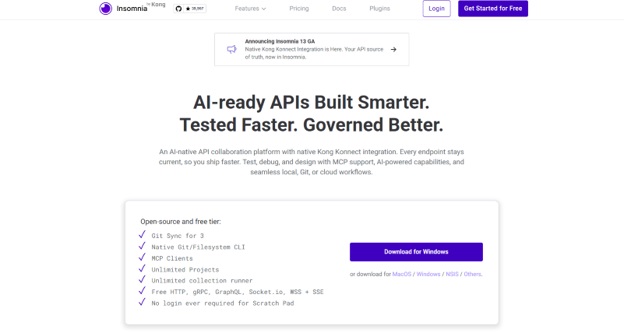
Insomnia Features:
- REST APIs
- Strong GraphQL support with schema introspection
- Git synchronization
- gRPC support
- Request chaining
- WebSocket testing
- Environment management
Website: https://insomnia.rest/
4. Bruno
Among developers, Bruno is now one of the most talked about API software development tools. Bruno saves API collections locally as plain-text files that can be directly committed into Git repositories, in contrast to cloud-centric tools.
Bruno adopts a different strategy; instead of storing collections in a cloud account, it stores them as plain-text files in your own Git repository, making it an ideal choice for teams that already review API changes like code. Bruno is intended to help your team incorporate API testing into the codebase review procedure.
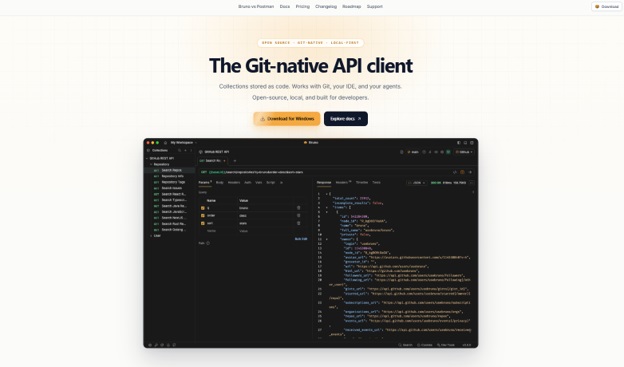
Bruno Features:
- Local-first architecture
- WebSocket support
- Git-native workflows
- GraphQL APIs
- REST APIs
- gRPC APIs
- Open-source
Website: https://www.usebruno.com/
5. Apidog
Apidog is quickly becoming one of the fastest-growing platforms for building APIs. Unlike traditional API development tools that often require the use of multiple applications for different tasks, Apidog brings everything you need into one convenient platform.
Whether you’re designing APIs, testing them, mocking responses, documenting your work, or collaborating with your team, Apidog streamlines the entire API development process. This all-in-one approach not only saves you time but also makes the API development experience much more enjoyable and efficient. If you’re looking to simplify your workflow and enhance collaboration, Apidog is definitely worth checking out.
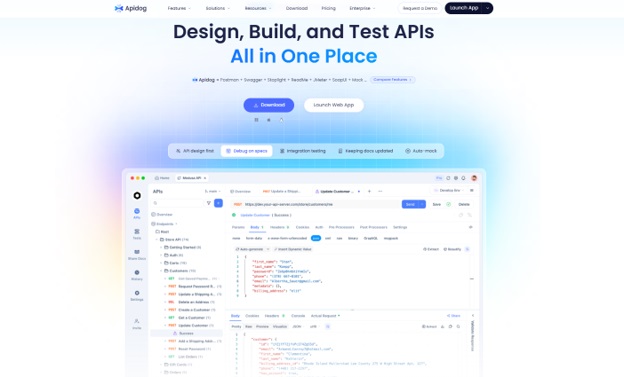
Apidog Features:
- OpenAPI design-first workflow
- Automated testing
- Built-in mock servers
- Version control
- Documentation generation
- Team collaboration
Website: https://apidog.com/
Also know: Top 5 VSCode Extensions for Web Development
Frequently Asked Questions
Q1. What are the best API development tools to use in 2026?
In 2026, Postman is the best all-in-one platform for developing APIs. It has many features that help developers at all skill levels. If you want an easy-to-use alternative, Apidog is becoming popular for its strong capabilities and user-friendly design. For developers who like using Git, Bruno is a new and exciting choice. It works well with Git workflows, making version control easy.
Q2. Which API testing tool is the best substitute for Postman?
If you’re looking for strong alternatives to Postman for testing APIs, consider Bruno, Insomnia, and Apidog. Each tool has its own strengths, so the best choice depends on your needs and preferences. Insomnia is known for being user-friendly with a clean design, while Bruno has great features for teamwork.
Q3. Why is OpenAPI important?
OpenAPI is important for APIs because it provides a standard way of building APIs. This standardization allows for automatic documentation, which keeps your API current and easy to understand. It also improves testing, management, and code generation, making development faster and more efficient. When teams use OpenAPI, they can communicate better, reduce confusion, and make their workflows smoother, leading to a better experience for both developers and users.
Using the right API development tools makes your job easier and your projects better. There are many options, so consider what you need and prefer. Whether you are a professional developer or just starting, the API software development tools mentioned in this article will help you succeed. So, use these API development technologies to accelerate your development process.